Los Al RoboticsFRC Team 6220

Our mission

Serve as the Los Alamitos hub for hands-on engineering and business experience for all ages through student-led, student-driven competition in FRC.

Los Al Robotics is Los Alamitos High School's FIRST Robotics Competition team, also known as The Golden Griffins, Team 6220. This season 48 students, from 8th to 12th grade, design, build, program, and fund a 115-pound competition robot. They also run the team itself: the budget, the sponsors, the schedule, and the training.

We treat robotics like a varsity sport. Fall is training and offseason competitions. In January a new game is released and the build season starts, with meetings nearly every day for six weeks. In the spring we compete at FIRST California district events, against teams from across the state.

Our mentors are engineers and professionals who bring experience, safety, and advice. The students make the decisions.

What is FRC?

The FIRST Robotics Competition is an international high school league. Each January a new game is revealed, and teams have a few months to design and build a robot to play it. Teams compete hard, then help each other in the pits.

Learn more at FIRST ↗
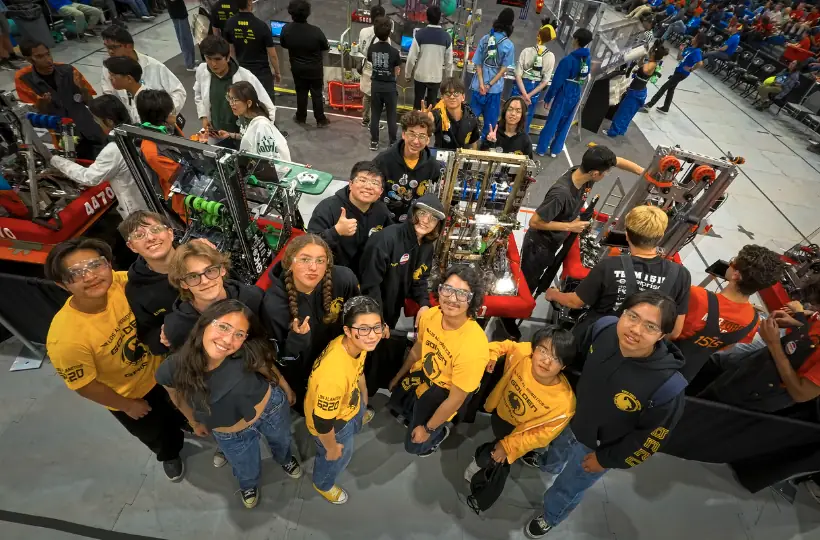
Team 6220 members in gold and black team shirts smiling up at the camera in the pits

How we work

Our six pillars

The principles behind every decision we make, on and off the field.

1

Student-led, student-driven

Students make nearly every final decision, for the robot and for the team. Mentors bring experience, safety, and advice; they don't build the robot for us. Sure, students make more mistakes, but that means we have even more opportunities to learn.

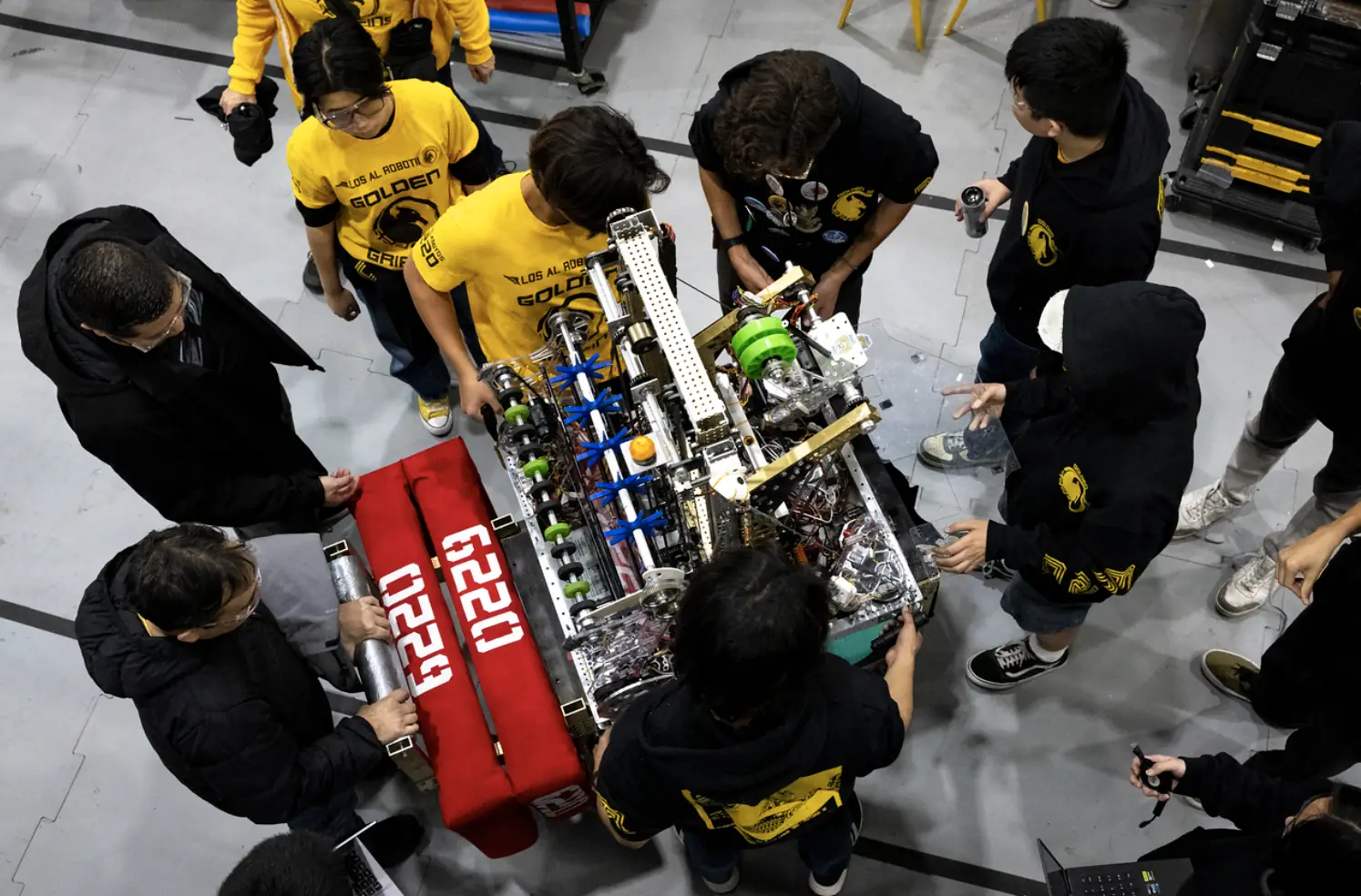
Students and mentors working on the robot in the pits, seen from above
  1. Find out what you want to learn, and learn what you need to know

    Follow what interests you, and pick up whatever the team needs from you along the way. Nobody needs experience to start.

  2. You get out what you put in

    The more time and effort you give, the more you learn and the more the team trusts you with.

  3. Continuity: think about the team's future

    We document our designs, code, and processes, and we train the next members, so the team gets stronger every year instead of starting over.

  4. The best idea always wins

    Not the idea of the most senior person, student or mentor. Ideas are judged on data and merit.

  5. Steal from the best, innovate the rest

    In FIRST, sharing knowledge is how we all learn and grow. Study what works, find room for improvement, and share what we learn.

And the FIRST values

Gracious Professionalism: compete hard, and treat everyone with respect while you do it. Coopertition: help other teams even while you compete against them; we borrow tools, share parts, and fix other teams' robots in the pits.

What students learn

Real tools, real responsibility

Everything we build is intentional, not perfect. Students learn the same tools and habits engineers and businesses use.

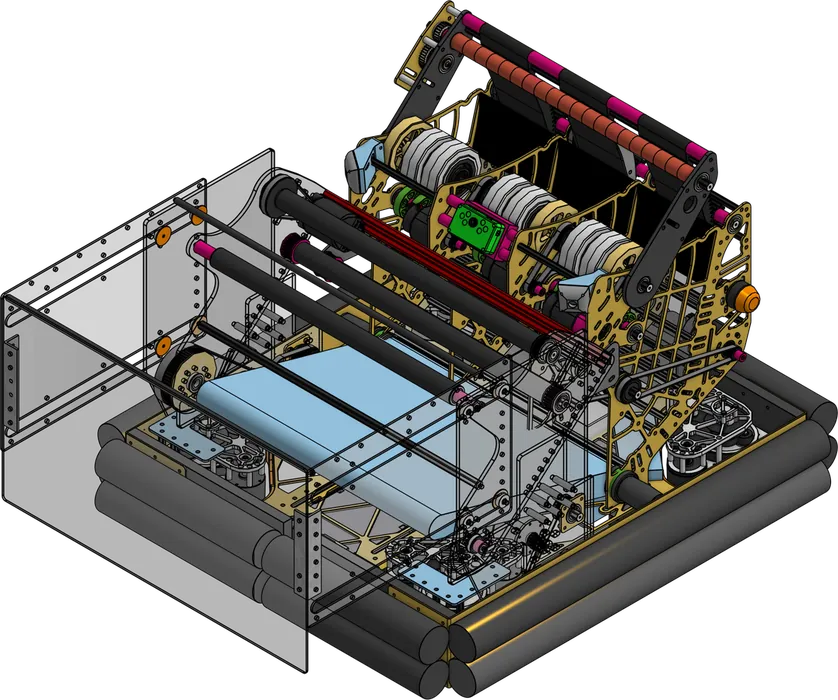
CAD render of Goober, Team 6220's 2026 robot, designed by students in Onshape
Goober, our 2026 robot, in Onshape CAD
  • Mechanical engineering and design

    Onshape CAD, design reviews, prototyping, weight and center-of-gravity budgets, and game strategy

    Leads to Mechanical, aerospace, and product engineering

  • Manufacturing

    CNC router and mill, 3D printing, lathe and hand tools, assembly, and shop safety

    Leads to Manufacturing, machining, and industrial engineering

  • Software and controls

    Java and WPILib, Git and GitHub, computer vision with AprilTags, autonomous path planning, and simulation

    Leads to Software engineering, computer science, and robotics

  • Electrical

    Power distribution, CAN networks, sensors, crimping and wiring standards, and troubleshooting

    Leads to Electrical and computer engineering

  • Business and leadership

    A $45,000 budget, sponsorship pitches, grant writing, marketing and social media, project schedules, and leading a team of 48

    Leads to Business, marketing, management, and entrepreneurship

How we're organized

Subteams and leadership

Every member joins a subteam. Students lead every subteam and the team as a whole.

Team Captain

Assistant Captains (2)

Technical4 subteams

  • Design Lead+ Design Manager
  • Manufacturing Lead+ Manufacturing Manager
  • Programming Lead
  • Electrical Lead

Operations1 subteam, 3 leads

  • Business Lead
  • Marketing Lead
  • Outreach Lead

Technical subteams

  • Design

    Creates a full plan for the robot using CAD and strategic design. When the design is finished, Design manages the temporary in-season Strategy and Scouting subteam and develops a full strategy for our team, along with a plan to collect and use data at competitions through scouting. Design also provides Business with information for the Technical Binder.

  • Manufacturing

    Executes the design: makes parts from the ground up as needed, uses off-the-shelf parts, and assembles everything. Manufacturing also maintains the team's tools, keeps the shop organized, and builds our practice field. It sets and documents the team's safety practices, keeps the shop and the competition pit clean and safe (a safe shop must first be a clean shop), and trains every new member in basic tool use and safety.

  • Programming

    Develops the software for the robot, turning it from a remote-control drivetrain into a nearly autonomous robot, and chooses the sensors that give the robot the data it needs to help the driver.

  • Electrical

    Manages the robot's wiring and electronics, keeping them as organized as possible, and keeps members in the pit at competitions ready to fix electrical issues.

The Operations subteam

Operations is one subteam, but its duties are broad, so it is split into three areas, each with its own lead. Members can work on any task in any area. At competitions, Operations produces photos and video, gives award presentations, organizes scouting and pit schedules, and keeps the team engaged, organized, and unified.

  • Business

    Handles our LAHS and ASB requirements, website content, sponsorships, grants, award presentations, financial records, and keeping costs down. Business also keeps the team's documentation, archives, and history organized, and records the lessons we learn.

  • Marketing

    Manages the team's appearance and public relations: social media, website graphics and photos, team merch, graphics for award and sponsorship packets, and other public materials. Marketing keeps our media organized and works closely with Business on the team's image.

  • Outreach

    Manages our outreach goals, organizes full-team training, and hosts camps and events. Outreach documents each one so Business and Marketing can use it for awards and our reputation in the community.

How we stay organized

Lead vs. manager

Every subteam has a Lead, the technical decision-maker who decides what the subteam builds and has the final say on technical questions. Some subteams also have a Manager, the executive decision-maker who decides how it gets done: organizing members, running training, and documenting progress. The lead can focus on the engineering while the manager focuses on the people. Without a manager, the lead does both.

Weekly lead meetings

Every Friday the captains, leads, and managers review the week, plan the next one, and flag what each subteam needs from the others. We follow a simplified Robert's Rules of Order to keep them short.

Progress updates

After every meeting, each subteam posts what got done, what's next, and what it's waiting on, so absent members and other subteams stay caught up.

A main subteam, plus more

Every member picks one main subteam and can join others with that lead's approval. Operations and Electrical are the most common secondary subteams.

Written-down knowledge

Each subteam keeps its resources, standards, and lessons learned in the team Drive, so what we learn outlasts every graduating class.

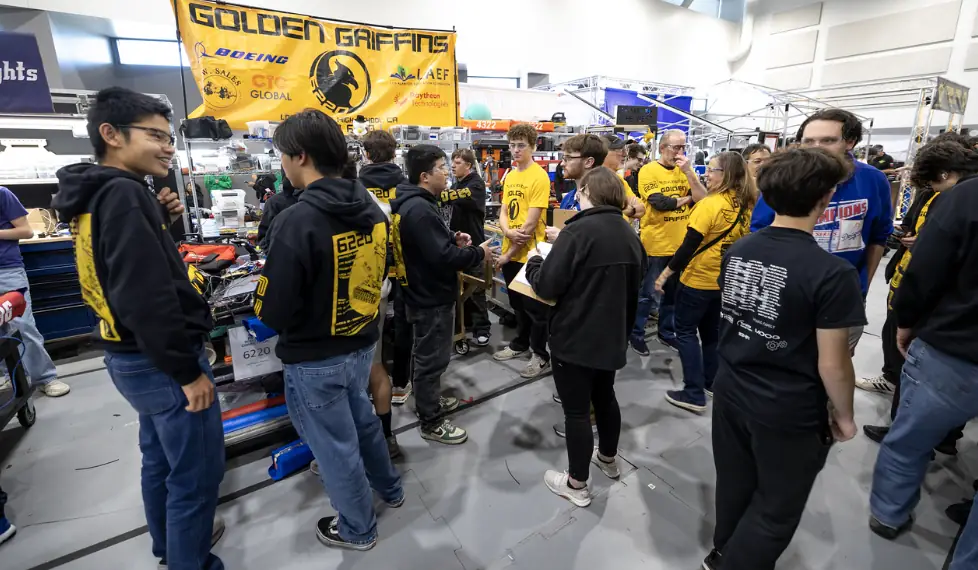
Team 6220 members and visitors gathered at the pit under The Golden Griffins banner

Beyond our team

STEM for all ages in Los Alamitos

Our mission reaches past our own robot.

Summer camps

A three-week robotics camp with the Los Alamitos Education Foundation, created and run by our students.

STEM Expo

A campus-wide STEM event at Los Alamitos High, built with the school's STEM clubs.

Open Workshop days

Hands-on engineering in our shop for students who aren't on the team.

Around Los Alamitos

Robot demos at community and sponsor events, and work with the district's elementary and middle schools.

See our outreach →

The adults behind us

Our mentors

Mentors teach, keep the shop safe, give advice, and maintain knowledge from season to season. Students make the calls.

Mechanical

Bruce Riedinger

A retired Boeing engineer whose experience guides the technical and mechanical direction of our designs.

Electrical

Laura Hall

A retired Broadcom hardware engineer who teaches our electrical team best practices for wiring.

Programming

Lee Tokuda

An experienced software engineer who helps our programmers improve how they work: their development process, workflow, code reviews, and GitHub.

Programming

Andy Gandara

An experienced software engineer who helps our programmers write efficient code and improve how they develop it.

Management

Tamas Vejsz

An experienced engineering manager who provides oversight and direction for the team.

Management

Russel Hirotsu

An RTX engineer and longtime FIRST participant who helps guide how the team is run.

Want to mentor? Tell us how you'd like to help →

Our supervisor

Mr. Jones

Mr. Jones teaches AP Chemistry, was named Los Alamitos High School's 2025 Teacher of the Year, and represents our team on campus. Every meeting in our shop happens because he's there.

  • Subject AP Chemistry
  • Honors LAHS Teacher of the Year, 2025
  • Pickles Enthusiast, not lover. There's a difference.
  • Pets Guinea pigs
Visit Mr. Jones's site ↗